

Published Thursday 25 September 2025 at 11:15
Lancashire’s councils are calling on residents, businesses and community organisations to have their say to help shape the future of local government in the county.
Currently, Lancashire County Council provides services such as social care, education, roads, and libraries, while district and borough councils manage services like bin collections, planning, housing, and leisure.
Blackburn with Darwen and Blackpool operate as unitary councils, which deliver all the above services.
The Government has set out its ambition to dissolve these councils and instead create a number of new unitary councils to deliver all local services through single authorities.
All of Lancashire’s 15 councils are now working together to develop proposals for what these new unitary arrangements might look like.
They are collectively calling on residents, businesses and community organisations to fill in a short survey to find out their views on local government.
Questions include how important services currently provided are, what people’s experience of services has been and what they think about the creation of new unitary authorities, including benefits and opportunities as well as concerns.
What does this mean for Blackburn with Darwen?
As part of this process, Blackburn with Darwen Borough Council will ultimately cease to exist in its current form with a new, larger council taking its place.
Our key priority during this process is to make sure the needs of our communities are met. The proposed options and maps can be found here: www.givemyview.com/lancashirelgr
Councillor Phil Riley, Leader of Blackburn with Darwen Council, said:
“This is undoubtedly the biggest shake up of local government in over 50 years. I hope that people across our two towns will take part in the survey so that we can reflect their views on what’s important as we prepare to submit the final proposals in November.”
“We support all options that will create an East Lancashire wide unitary council. We believe this makes the most sense for our part of the county. It’s a natural economic area, covers a sensible geography, and brings together communities that are similar in character, needs and history. We want to see a council which is large enough to deliver efficiently whilst remaining close to our communities to understand and meet local needs.”
The survey answers will help the councils shape their proposals for Lancashire’s future, which must be submitted to the Government by November 28, 2025.
Currently a range of options, from the creation of two through to five new councils, are being considered.
The proposals must demonstrate:
- Stronger local leadership
- Improved service delivery and outcomes
- Value for money and financial sustainability
- Economic growth and prosperity
- Community identity and effective local partnerships
The Government is expected to lead a public consultation on the proposals early next year with a preferred option selected in the summer.
New elections for the shadow authorities could then take place in May 2027 with the new councils taking over all services on April 1 2028.
To take part in the survey visit www.givemyview.com/lancashirelgr
Help to complete the survey is available at libraries in Lancashire (including Blackpool and Blackburn with Darwen). Preston’s central library is currently closed and so help will be available at the Reception Desk, Preston Town Hall.
Alternatively, paper copies are available by contacting lgr@lancashire.gov.uk or calling 0300 1236701, or via your local authority where braille and easy read formats will also be available on request.
Notes to Editors
Parish and town councils are not affected by these changes.
For more information on Local Government Reorganisation, visit the Local Government Association’s hub:
The devolution and LG reorganisation hub | Local Government Association
Click the link below for accessible versions of possible options for Local government reorganisation:
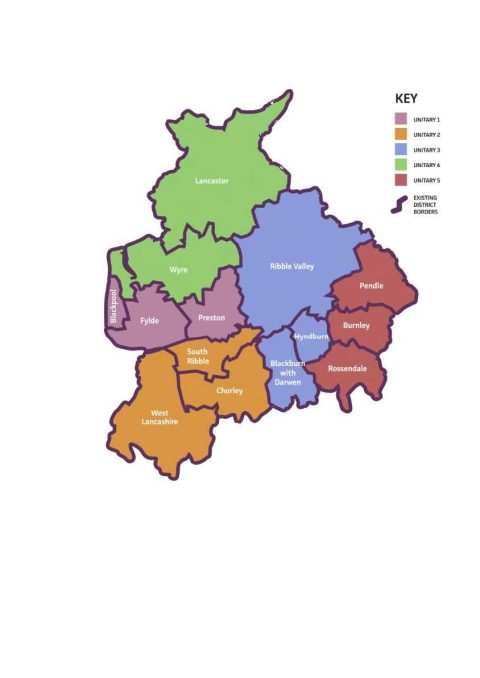
A possible five unitary model
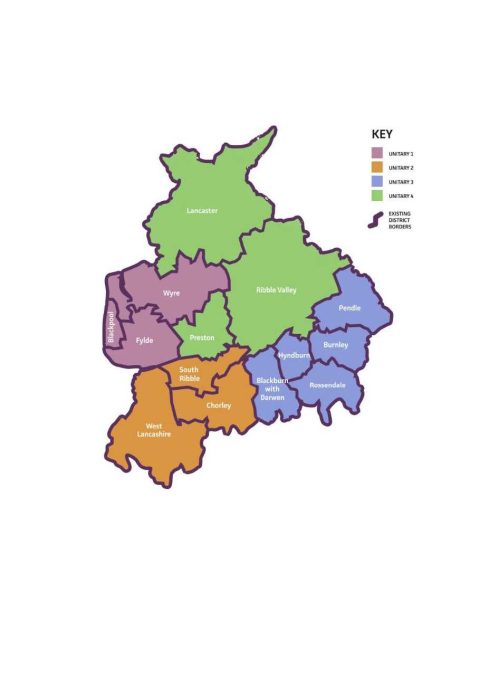
A possible four unitary model
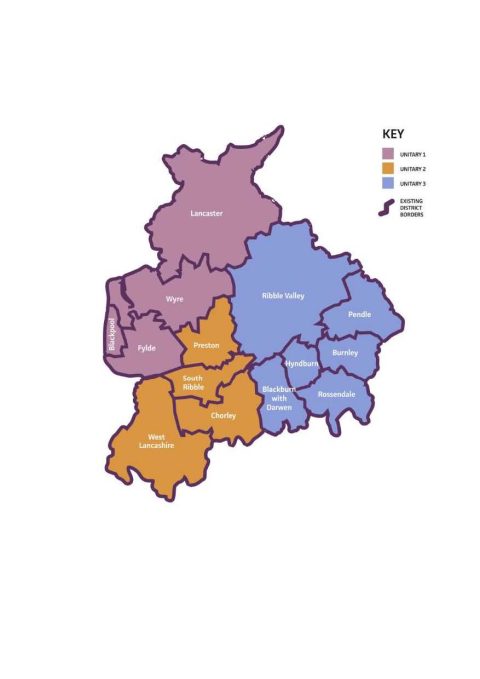
A possible three unitary model
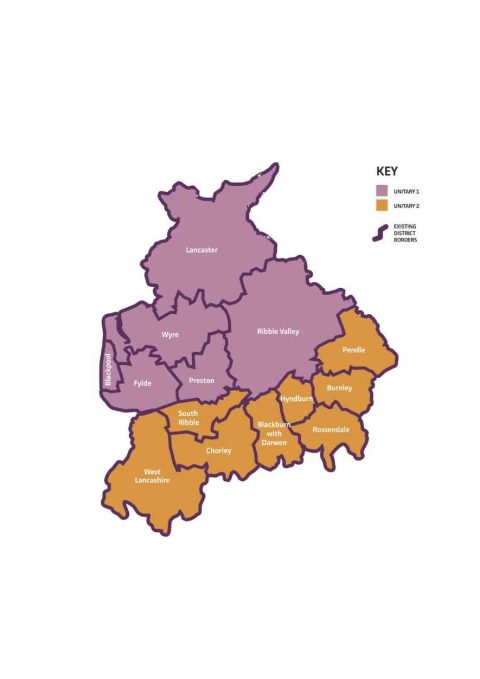
A possible two unitary model
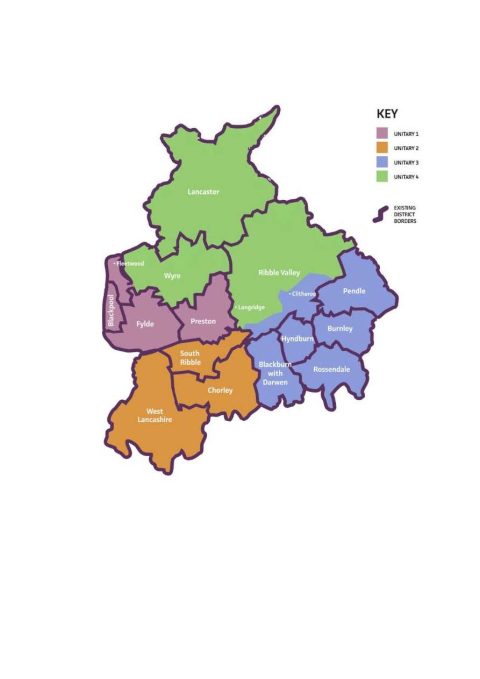
An alternative possible four unitary model